A government route is surveyed.
An Alaska Road Commission crew scouts the Seward-to-Nome route during the gold-rush era.
The story begins with connections: between people, between places, and between one generation and the next.
Explore this chapter ↓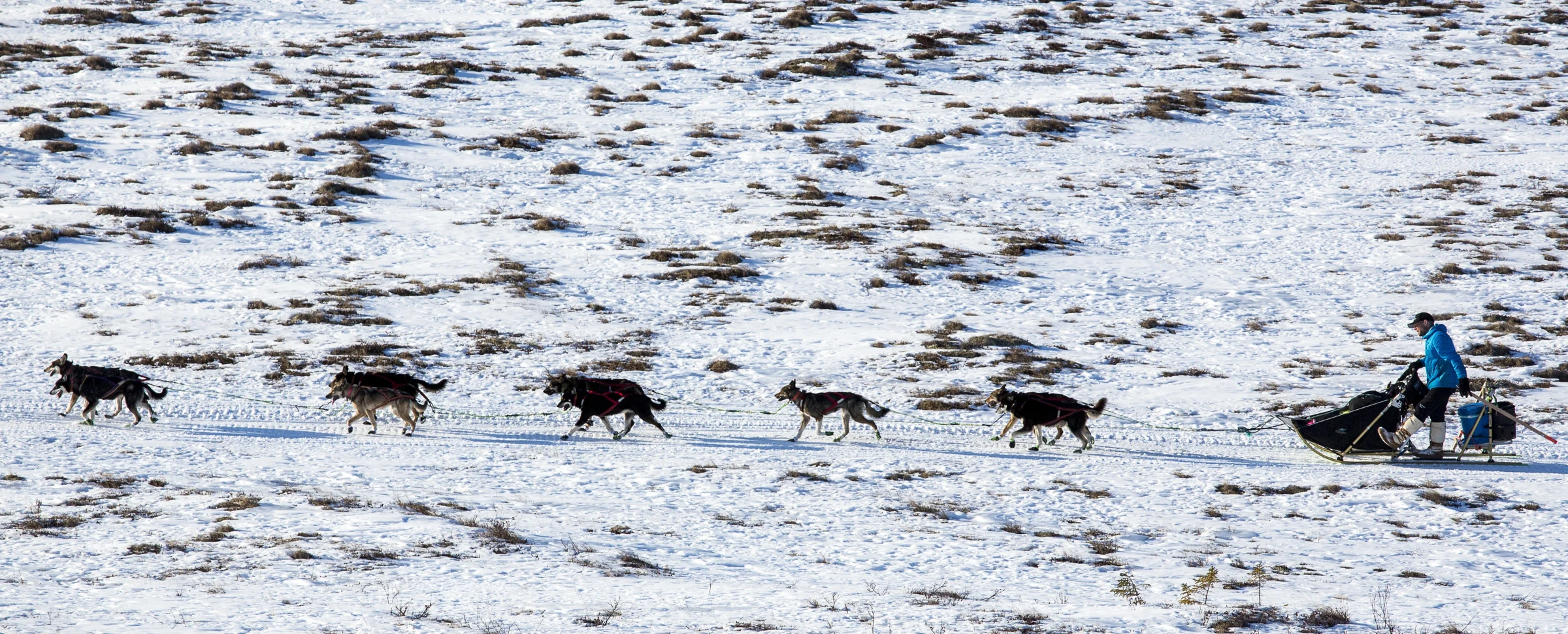
Long before the gold rush, Alaska Native communities travelled routes across this landscape. Portions of those existing travel networks became part of the route now known as the Iditarod National Historic Trail.
Listen through Project Jukebox ↗An Alaska Road Commission crew scouts the Seward-to-Nome route during the gold-rush era.
Congress designates the Iditarod National Historic Trail.
The statewide nonprofit is founded to advance knowledge, appreciation and enjoyment of the trail.
Partners, communities and volunteers continue to care for the route and share its stories.
Explore the oral-history resources linked by the Alliance, and bring the trail's stories into the classroom.
Visit Project Jukebox ↗Explore learning resources ↗Browse the ARLIS collection of documents, photographs, inventories and other records.
Explore ARLIS ↗02Discover oral-history collections through the University of Alaska Fairbanks.
Visit Project Jukebox ↗03Bring place-based learning into a classroom or your own next discovery.
Find learning resources ↗Alaska Native travel and trading routes preceded gold-rush development. Later transport networks drew on those established connections and winter travel skills.
Gold discoveries expanded traffic between coastal ports and inland mining districts. Mail runs, freight teams and roadhouses supported travellers before aircraft increasingly took over long-distance transport.
The 1925 serum relay followed a route from Nenana to Nome that joined part of the historic trail network. That journey, the wider historic trail and the modern sled-dog race have connected but distinct histories.
Meet the places behind the history ↗Original Alliance source ↗